
Public debate has never been so accessible. The internet and social media provide a platform for almost anyone to have a say in conversations that can influence public opinion and, ultimately, public policy. Yet despite this unprecedented ability to communicate, many of the people most directly affected by policy decisions remain remarkably absent from the conversations that determine their future.
Governments consult experts. Researchers publish studies. Journalists interpret new findings. Advocacy organisations campaign passionately for change. Each of these groups performs an important role in a healthy democracy. Scientific evidence, professional expertise and investigative journalism all contribute to better-informed decisions.
What is often missing, though, is the perspective of everyday people who live with the consequences of those decisions.
Consumers know things that cannot be easily replicated in a lab, captured in a statistical model or fully understood by policy analysis alone. They understand the day-to-day realities of living with a condition, using a product, dealing with regulations or adapting to changes brought about by legislation. Their experiences illustrate how policies operate outside controlled settings and amid the complexities of everyday life.
That’s not to say scientific evidence doesn’t matter. On the contrary, science remains the foundation upon which sound public policy should be built. However, evidence should never be understood as consisting solely of clinical trials, systematic reviews or population statistics. The lived experiences of those directly affected provide context that helps explain why interventions succeed, why they fail, and why people make the decisions they do.
The most effective public policies are built on rigorous scientific evidence, interpreted in the context of the experiences of people whose lives the policies are meant to improve.
The Power of Ordinary Voices in History.
History is replete with instances of ordinary people making a positive contribution to society by speaking out and sharing their experiences.
One of the most powerful examples may be the HIV/AIDS epidemic. By the 1980s and 1990s, patients and their families began to challenge traditional models of health care decision-making. They refused to be passive and demanded involvement in decisions about research priorities, treatment approvals, and healthcare policy. In many parts of the world, they have changed how patients are involved in clinical research and how quickly life-saving medicines reach them. Patient engagement has become a fundamental aspect of healthcare research, not a nice-to-have add-on.
Another potent example is the disability rights movement. For many years, disability was viewed through a medical lens, focusing on individual impairments and not the barriers that society itself creates. That conversation was changed by people with disabilities. They discussed their daily lives, emphasising the obstacles that architects, legislators and planners often overlook. Their voices shaped accessibility standards, inclusive design principles and anti-discrimination legislation that millions of people around the world benefit from today.
The same goes for mental health activism. For decades, stigma prevented many individuals from speaking openly about depression, anxiety and other mental health conditions. As more people found the courage to tell their stories, public attitudes gradually changed. Their openness helped transform mental health from a largely hidden issue into one that employers, schools, healthcare providers and governments increasingly recognise as a legitimate public health priority.
Road safety improvements have also been shaped by lived experience. Engineers and policymakers rely heavily on crash statistics, but behind those numbers are individuals and families whose personal accounts have repeatedly highlighted problems that raw data alone could not convey. Their experiences have influenced improvements in vehicle safety, road design, child restraints, drink-driving laws and emergency response systems.
These examples share an important lesson. Scientific evidence identified many of the problems, but consumer experiences often revealed how those problems affected real people and what practical solutions were most likely to succeed.
Why So Many People Choose Silence
Given the importance of lived experience, it is reasonable to ask why so many people remain silent.
The answer is complex and deeply human.
Many people doubt that their individual story has any real value. They assume that researchers already understand the issue or that policymakers have access to all the information they need. Others worry that sharing a personal experience will invite criticism, ridicule or accusations that anecdotal evidence should not influence public policy. In increasingly polarised public debates, expressing a personal experience can sometimes feel like entering a battlefield rather than contributing to a conversation.
There is also a quieter psychological factor at work.
When people overcome a major challenge, they often move on with their lives. Former patients return to work. Former addicts rebuild relationships. Former smokers stop thinking about cigarettes. Success naturally encourages people to look forward rather than revisit difficult chapters of their lives. Unfortunately, this creates an unintended imbalance.
Those who have successfully solved a problem frequently disappear from public discussion, while organisations, institutions and campaigners continue to dominate the conversation. Over time, the voices of those with lived experience become increasingly difficult to hear, not because they no longer exist, but because they have returned to living ordinary lives.
Silence should never be mistaken for absence.
Nor should it be interpreted as agreement.
The Consequences of Missing Perspectives
When consumer voices are absent, public debate risks becoming incomplete.
Researchers can measure outcomes, identify trends and estimate risks across populations. These insights are indispensable. However, statistics rarely explain the motivations, barriers and daily realities that shape human behaviour. Numbers can show that people stop using a product, but not always why. They can demonstrate that an intervention succeeds in one setting but fails in another, yet they cannot always reveal the practical challenges faced by those expected to follow the policy.
Without these perspectives, well-intentioned decisions may produce unintended consequences.
Policies may become difficult to implement. Regulations may fail to reflect real-world behaviour. Opportunities to improve public health may be overlooked because the people most affected were never asked about their experiences.
Public discourse also becomes vulnerable to a false impression of consensus. If only researchers, institutions and advocacy organisations contribute to a debate, policymakers may conclude that alternative perspectives scarcely exist. In reality, millions of people may hold valuable experiences that simply never entered the public record.
Good policy depends not only on hearing the loudest voices but also on ensuring that quieter voices are not unintentionally excluded.
Tobacco Harm Reduction and the Importance of Lived Experience
Tobacco harm reduction illustrates this challenge particularly well.
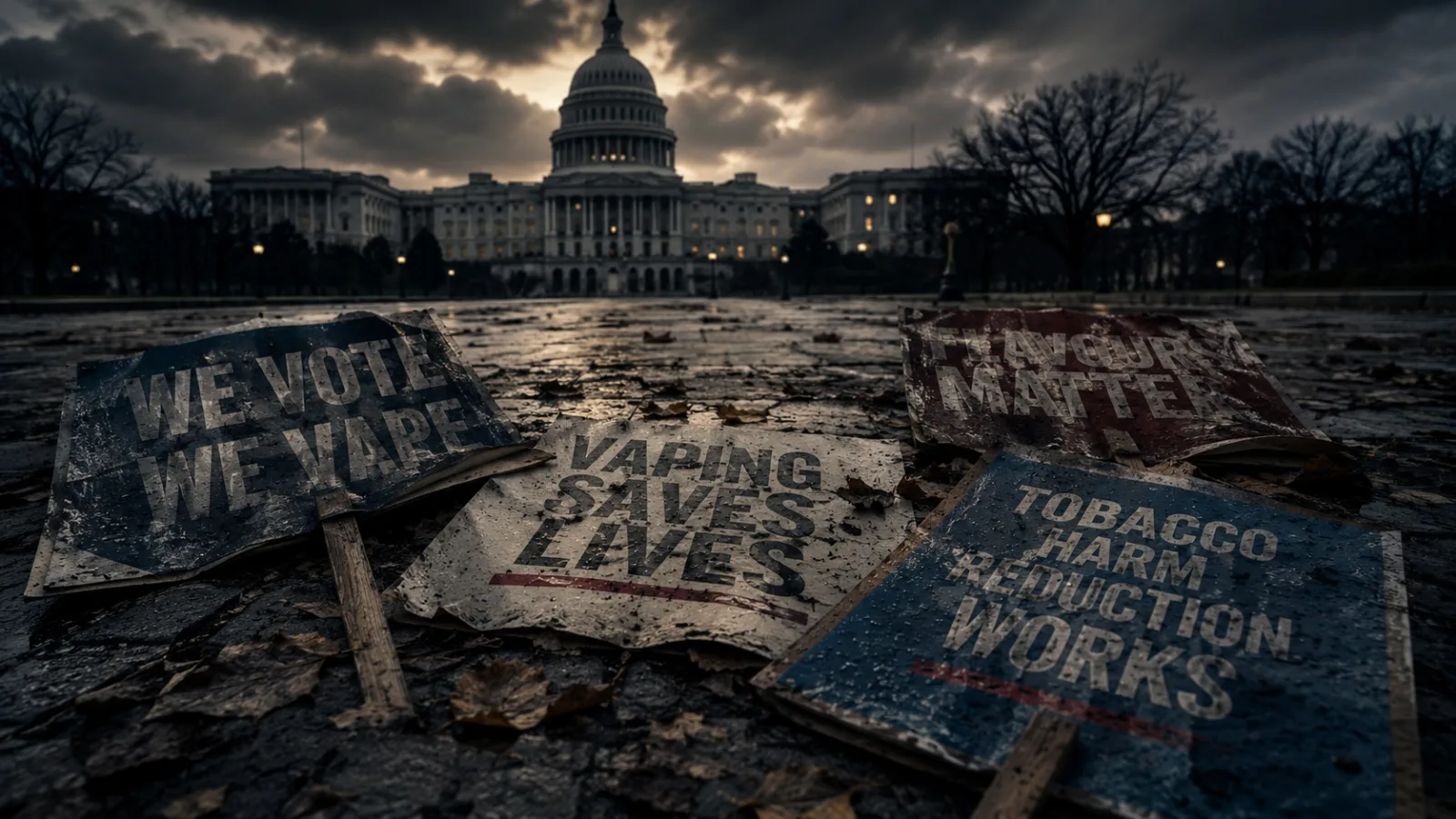
Across the world, millions of adults report that switching from combustible cigarettes to lower-risk nicotine products fundamentally changed their lives. Many describe years of unsuccessful attempts to quit smoking before finally finding an alternative that worked for them. Their stories often include improvements in breathing, fitness, finances, family relationships and overall quality of life. Increasingly, these lived experiences are supported by a substantial body of scientific evidence showing that while these products are not risk-free, they expose users to significantly fewer toxic substances than combustible cigarettes and can play a role in helping some adults move away from smoking entirely.
Yet these experiences are often under-represented in public debate.
It is understandable that the media's focus is on emerging concerns, youth experimentation, and regulatory developments. Researchers investigate population-level effects, toxicology and behavioural patterns. Policymakers weigh competing public health priorities.
Each of these discussions is important.
But they remain incomplete if the experiences of adults who have successfully transitioned away from smoking are absent.
The reasons people quit, the barriers to previous success, the impact of regulations on their decisions and the strategies that were helpful in staying away from cigarettes provide information that cannot be fully obtained from laboratory studies or epidemiological data. These experiences are not a substitute for scientific evidence but an addition to it, providing context, highlighting practical difficulties and revealing opportunities that might otherwise be missed.
Building Better Public Debate
Healthy public discourse should never become a competition between science and personal experience.
The most effective decisions emerge when multiple forms of evidence complement one another. Scientific research helps us to understand the population. Professional expertise helps interpret that research and apply it responsibly. Lived experience shows how those findings play out in everyday life.
Each perspective answers different questions.
Together, they paint a fuller picture than any one of them could on its own.
Every person who shares their experience contributes another piece to that larger picture. No single story should determine public policy, but neither should thousands of consistent experiences be dismissed simply because they are personal. Lived experiences, when taken together, show patterns, point to unmet needs and reveal unintended consequences that should be taken seriously.
Consumer voices are not a substitute for evidence.
They are an essential part of it.
If public policy is ultimately about improving people’s lives, then the people whose lives are being shaped by those policies deserve more than a passing mention. They deserve a meaningful place in the conversation.
Only when science, expertise and lived experience are considered together can public debate truly serve the public it seeks to represent.